Built-up felt roofing (BUF) has been the default flat roof in the UK for most of the last century. Layers of bitumen-impregnated felt bonded together with hot bitumen or torch-applied adhesive, it’s the roof you’ll still see on most garage extensions, mid-century commercial buildings, and older dormers across the South East.
In 2026, though, it’s not the only game in town. EPDM rubber, hot melt, and single-ply PVC or TPO have each taken significant market share over the last decade, and homeowners weighing up a flat roof replacement are asking a fair question: is built-up felt still the right choice?
The short answer: sometimes yes, often no. This guide covers when BUF still makes sense, what it costs in 2026, how long you should expect it to last, and where EPDM, hot melt, or single ply would serve you better.
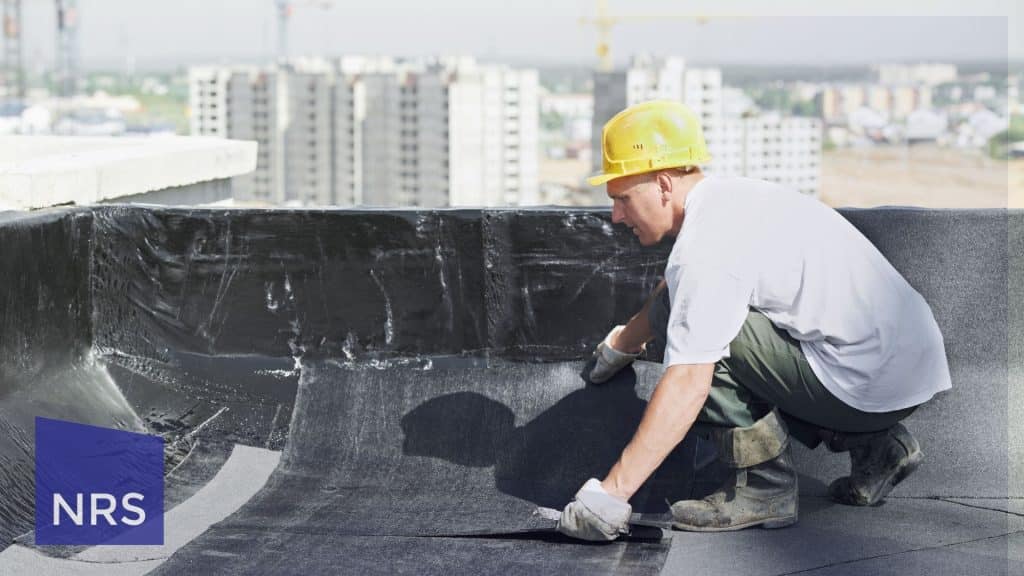
What is built-up felt roofing?
Built-up felt roofing is a multi-layer waterproofing system. In a typical 3-layer UK build-up:
- First layer – a perforated or partially-bonded base sheet laid directly onto the roof deck, which lets the waterproof layers above move slightly without cracking.
- Middle layer – a reinforcing felt, usually polyester or glass-fibre reinforced, bonded with hot bitumen or torch-on adhesive.
- Top layer – a cap sheet with a mineral or solar-reflective finish that protects the layers below from UV and foot traffic.
Two main fixing methods are used in 2026:
- Torch-on felt – each layer bonded to the one below using a gas torch to melt the bitumen backing. Dominant in newer BUF installs. See our complete torch-on felt roofing guide for the detail.
- Hot-bonded (poured) bitumen – traditional method using bitumen boilers. Still used on larger commercial roofs where the upfront equipment is justified.
Cold-applied and self-adhesive felts also exist but make up a smaller share of UK flat roof work.
Where built-up felt roofing is still a sensible choice
BUF hasn’t disappeared because it still has real strengths on the right project:
- Garages, sheds, and outbuildings where budget and simplicity matter more than 30-year lifespan.
- Flat dormers and small extensions on domestic properties, particularly where the roof is hidden from view and not walked on.
- Insurance replacements where a like-for-like replacement keeps the premium unchanged and minimises complexity.
- Commercial flat roofs at the budget end of the scale, especially where the plan is to re-roof again in 15-20 years.
- Projects where access is constrained – BUF can be installed by smaller crews with less equipment than hot melt or large-format single ply.
If you are new to the material, our introduction to felt roofing covers the basics, and for flat roofs it is worth comparing torch-on felt against hot melt before you decide.
Where EPDM, hot melt, or single ply will usually serve you better
On domestic flat roofs being replaced in 2026, there are three categories where we’d recommend moving away from felt:
EPDM rubber membrane
A synthetic rubber (ethylene propylene diene monomer) sheet, usually supplied in one large piece that covers the entire roof with no joints.
- Lifespan: typically 25-40 years manufacturer-rated, with many UK roofs delivering longer
- Best for: homeowners who want a long-life solution on a visible flat roof
- See our EPDM roofing guide for a deeper dive
Hot melt roofing
Fully-bonded, liquid-applied rubberised bitumen, poured onto the deck and reinforced with polyester. Forms a seamless waterproof layer with no joints.
- Lifespan: 30+ years, often longer on well-detailed installs
- Best for: commercial roofs, complex upstand and penetration details, inverted warm-roof build-ups
- See our what hot melt roofing is and why commercial property owners are choosing it guide
Single ply (PVC, TPO, FPO)
Factory-made plastic or polymer membranes welded on site into a single continuous sheet.
- Lifespan: typically 25-35 years depending on spec
- Best for: medium-to-large commercial roofs, clean rectangular decks
- Compare: hot melt vs single ply
How long does built-up felt roofing last in 2026?
A correctly installed 3-layer torch-on felt roof on a domestic garage or extension should last 15-25 years before it needs significant attention. That range assumes:
- Installation by a competent roofer with the correct priming, lapping, and upstand detailing
- Adequate falls to drainage – ponding water shortens BUF life significantly
- Solar-reflective or mineral-finished cap sheet protecting the waterproof layers from UV
- No regular foot traffic on the roof (or duckboards if access is needed)
Older built-up felt roofs from the 1970s-1990s are often at or past end of life in 2026. If your felt roof is over 25 years old and showing blisters, cracked cap sheet, pooling water, or patch repairs, it’s into replacement territory.
What drives built-up felt roofing cost in 2026?
Built-up felt pricing varies with roof size, existing deck condition, access, and the complexity of upstands, parapets, and penetrations. The main drivers:
- Roof area. Smaller roofs carry a fixed cost for set-up, stripping, and materials; larger roofs get better per-m² economics.
- Existing roof condition. Roofs that need deck repairs, new insulation to meet Part L, or removal of old build-ups cost more than a clean overlay.
- Access and scaffold. Ground-level garage roofs are easier and cheaper than first-floor extensions requiring full scaffold.
- Detailing complexity. Parapets, roof lights, multiple penetrations, and inverted details add labour time vs a simple rectangular deck.
- Alternative system considered. The cost gap between BUF and EPDM has narrowed over the last few years, so the decision in 2026 is usually about lifespan and detailing rather than straight price.
For a written quote on a specific flat roof, get in touch for a free assessment.
Pros and cons of built-up felt roofing
Strengths:
- Lower upfront cost than most alternatives, especially on very small roofs
- Proven track record – a familiar system every UK roofer knows how to install and repair
- Good UV resistance when the cap sheet is mineral- or solar-reflective finished
- Patch-repairable – local damage can be addressed without replacing the whole roof
- Fire-resistant finished surface when correctly specified
Weaknesses:
- Shorter lifespan than EPDM, hot melt, or single ply – typically 15-25 years vs 25-40+
- Joint failures are the most common cause of leaks; bonding quality varies with installer and weather
- Heavy compared to single ply or EPDM – relevant on older decks with limited structural capacity
- Ponding water degrades BUF faster than synthetic membranes
- Torch-on installation carries a fire risk; some commercial sites no longer permit torch work
Regulations and standards for flat roofing in 2026
Part L 2021 sets the U-value target for a flat roof refurbishment at 0.25 W/m²K (or 0.18 W/m²K for new builds and full warm-roof rebuilds). Any replacement where the thermal element is being renewed triggers the refurbishment target.
In practice, hitting 0.25 W/m²K on a re-roof usually means:
- 100-120mm PIR insulation between or above the deck on a warm-roof build-up
- Vapour control layer below the insulation on the warm side
- Ventilation provision on cold-deck or hybrid builds (though warm roof is now the default)
For the detail on where insulation goes and what it costs, see our roof insulation guide. Part F (ventilation) and Part C (moisture resistance) are also relevant on flat roof rebuilds – mistakes in vapour control are the single biggest cause of early interstitial condensation failures.
Building control will usually want to see the insulation build-up and U-value calculation before signing off a re-roof. Any competent roofer should build this into the quote.
How to choose between felt, EPDM, hot melt, and single ply
A rough decision framework for a flat roof replacement in 2026:
| Situation | Likely best fit |
|---|---|
| Single garage, budget-led, planning to keep for <15 years | BUF (torch-on felt) |
| Visible domestic flat roof, want one-install-forever | EPDM |
| Complex upstands, penetrations, inverted warm roof | Hot melt |
| Large rectangular commercial roof, tight programme | Single ply (PVC or TPO) |
| Roof with regular foot traffic or plant | Hot melt or heavy-duty single ply |
The right answer depends on budget, access, timeline, and how long you want the roof to last. A good roofer will give you at least two options rather than defaulting to the system they’re most comfortable installing.
Frequently asked questions
How long should a built-up felt roof last in the UK?
A well-installed 3-layer torch-on felt roof should last 15-25 years in UK conditions. Older 2-layer BUF installations commonly reach 15-20 years before needing replacement. Lifespan drops if falls to drainage are inadequate, if the cap sheet is damaged by foot traffic or fallen branches, or if the original installation had poor joint bonding.
Can built-up felt be repaired or does it need full replacement?
Localised damage (small splits, bubble areas, lifted laps) can usually be patched without replacing the whole roof. A patch repair typically buys 3-7 years on an otherwise sound roof. Once you’re looking at multiple patches across the full surface, or the cap sheet has degraded broadly, full replacement is usually more cost-effective than ongoing repairs.
Is built-up felt roofing safe from fire?
The finished surface of a properly specified BUF roof is fire-resistant. The installation process using gas torches does carry fire risk – several UK building fires each year are traced to torch-on felt work. Competent contractors use hot-works permits, fire-watch personnel, and alternative methods (cold-applied or self-adhesive) near combustibles.
Can I install built-up felt on a very low pitch?
BUF works on pitches down to about 1:80 (around 0.7 degrees) if installed with the right detailing, but ponding water becomes a serious problem below around 1:40. On very low pitches, EPDM or hot melt usually outperforms BUF because they’re less sensitive to standing water.
Will building control sign off a like-for-like BUF replacement?
Usually yes, provided the insulation build-up hits the Part L 2021 refurbishment U-value (0.25 W/m²K on existing flat roof replacement). If your existing roof has no insulation or inadequate insulation, the re-roof project triggers a U-value upgrade, which may change the build-up significantly. The roofer should check this and include it in their quote.
Next steps
If you’re weighing up a flat roof replacement, the right answer depends as much on what you want from the roof as it does on the roof itself. Nationwide Roofing Southern works with BUF, EPDM, hot melt, and single ply across Sussex, Surrey, Kent & London, and is NFRC- and CHAS-registered – get in touch to walk you through which system fits your project before you commit to anything.